Martyn's Law: Implications for transport marketing communications in the UK
Why we welcome the changes
This is one for those in our network interest to know more about certain aspects of the UK’s imminent legislation related to crowd safety, management and information.
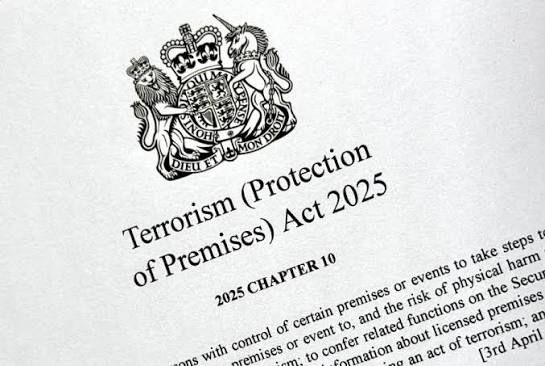
In spring 2027, Martyn's Law (the Terrorism (Protection of Premises) Act 2025) is expected to come into force across the UK. It was named after Martyn Hett, one of the 22 people killed in the Manchester Arena attack in 2017. It's the result of years of campaigning by his mother, Figen Murray, and its purpose is simple: venues and events should be ready to act if the worst happens.
At In the Round, we welcome it. Much of what the law now asks of organisers is what we've been advising clients for years. Plan for crowds beyond the venue boundary. Spread out arrivals so queues don't build. Have incident messages written and approved before you need them. Make sure every partner speaks with one voice. Until now that was the practice we always advocated for - soon it will be a legal expectation.
Most of the discussion so far has been about search regimes, barriers, CCTV and stewarding. Whilst these are vital there are two areas getting less attention than they deserve: how people get to and from events, and how organisers communicate with them.
What the law requires, in brief
Martyn's Law sets out two tiers of duty:
- Premises expecting 200 to 799 people at once must have public protection procedures in place. These cover evacuation, invacuation (moving people into a safe place), lockdown and communication.
- Larger premises, and qualifying events expecting 800 or more people at once, must also put in place public protection measures that reduce their vulnerability to an attack. They must document these, designate a senior individual responsible for compliance, and submit their plans to the regulator, the Security Industry Authority (SIA).
The SIA has said it will regulate in a supportive and proportionate way. The penalties are still significant, though, and so is the reputational risk of getting it wrong.
The duty doesn't stop at the gate
One of the most important features of the Act is that procedures must reduce harm if an attack happens at the venue or in its immediate vicinity. That brings in the parts of the spectator journey that have always been hardest to manage:
- queues outside security screening
- walking routes between the venue and stations, bus stops and car parks
- forecourts, plazas and transport interchanges
- dispersal routes after the event, when large crowds leave at the same time
Most of these spaces aren't owned or controlled by the event organiser. They belong to councils, transport operators, highways authorities and private landowners. Handling them well takes coordination, planning and communication.
What this means for event transport marketing and communications
Demand forecasting becomes evidence. Organisers must assess how many people they can reasonably expect, and when. Arrival profiles, mode split and peak-hour modelling aren't just operational tools any more. They support a legal record, so the methods need to be clear and defensible.
Queue design is security design. The largest crowds at most events form outside the security line. Staggered arrival times, timed entry, gate allocation by ticket and spreading demand across routes and modes all reduce how many people are waiting in unprotected space.
Egress plans need a "what if" version. A normal dispersal plan assumes every route and station is open. Organisers now need plans that also work when they aren't: holding crowds safely, redirecting them, moving them away from an incident quickly and ensuring coordinated public communication will be key.
Transport partners must be built in. Train and bus operators, highways authorities, police and local authorities all play a part in protecting the immediate vicinity. Their operational and communications plans have to fit with the organiser's, and that needs to be agreed and tested well before event day.
What this means for public communications
Pre-event communications matter more. Clear early messages about when to arrive, bag policies, prohibited items and what to expect at entry speed people through screening and shorten queues. Messaging that spreads demand away from congested public spaces in advance should become an imperative. A spectator who arrives prepared is quicker to process and easier to direct.
Prepare messages in advance. In an incident there's no time to draft messages. Evacuation, invacuation and lockdown messages should be written, approved and loaded ready for every channel: PA systems, screens, apps, social media, SMS, transport operator channels and staff briefings.
Reassure without revealing. Communications should give people confidence that safety is taken seriously without disclosing anything that could be exploited. Getting that balance right is a skill. Indeed by encouraging fans to arrive over a dispersed time period (as we always advocate) is an indirect way of helping to resolve a safety issue without overtly drawing attention to it.
Speak with one voice. In an incident, the organiser, venue, transport operators and police must give consistent instructions. Conflicting messages cause confusion, and confusion costs time. Agreed protocols, shared templates and clear approval chains are essential.
Make messages accessible. Instructions have to work for everyone: international visitors, disabled spectators, families with young children, and people who are stressed or disoriented. Plain language, multiple formats and multilingual messages aren't optional.
Staff are a channel too. Stewards, volunteers and transport staff are often the first point of contact. They need clear, simple scripts and to know exactly what to say and do.
What organisers should be doing now
Spring 2027 isn't far away, and events taking place in 2027 and 2028 are already being planned. We'd encourage organisers and host
authorities to:
- Confirm whether their events and venues fall within scope, and which tier applies.
- Review existing transport and communications plans against the Act's requirements.
- Map the immediate vicinity and identify who controls each space.
- Bring transport and multi-agency partners into planning early.
- Develop, approve and test incident communication protocols.
- Make sure the work is documented in a way that supports their submissions to the SIA.
How In the Round can help
None of this is new territory for us. For more than 30 years, In the Round has helped move people safely to and from some of the world's biggest events, including London 2012, Gold Coast 2018, Birmingham 2022 and FIFA World Cup Qatar 2022. The principles behind Martyn's Law have long been built into our transport and communications strategies. The law now makes them requirements, and we're ready to help clients meet them.
We can support organisers, venues and host authorities with:
- A Martyn's Law readiness reviews of existing TDM and public communications plans
- TDM arrival and dispersal strategies that reduce crowding in the immediate vicinity
- Multi-agency coordination on public communications with transport operators, police and local authorities
- Incident communication protocols, pre-approved messaging and channel plans
- Spectator information campaigns that speed up entry and set clear expectations
- Tabletop exercises to test plans before event day
- Clear documentation to support each client's own compliance
A shared responsibility
Martyn's Law treats preparedness as a leadership responsibility, not a box-ticking exercise. We've always seen getting people safely in and out the same way, and it's good to see the law agree.
If you're planning an event in the UK for 2027 or beyond and want to talk about what Martyn's Law means for your transport and communications plans, please come say hello@intheround.global.
#MartynsLaw #EventSafety #TransportPlanning #TDM #MajorEvents #CrowdManagement #PublicSafety #EventProfs